• Welcome to the Internet Infidels Discussion Board.

Dr. Wolff: Globalization

Is globalization (as Wolff describes it) good or bad for the economy?

  • Globalization has made us worse off.

    Votes: 0 0.0%
  • Globalization has made us better off.

    Votes: 3 100.0%
  • The most important function of business is to provide jobs, not make money.

    Votes: 1 33.3%
  • Anything made in China is crap.

    Votes: 0 0.0%
  • We should trade only with countries which pay a living wage to all workers.

    Votes: 1 33.3%
  • Globalization has benefited capitalists only, not workers.

    Votes: 0 0.0%
  • Consumers have a patriotic duty to buy only domestic products.

    Votes: 0 0.0%
  • Bringing back the factories is the highest priority.

    Votes: 0 0.0%

  • Total voters
    3
China is becomming the new 'leader of the capatilist world'.
Trump is cool with that. He is racist as hell.
The Slants can have Africa and all its niggas. Pootey can have Ukraine (apologies to any white peoples who get genocided) The Felon gets all the oil$$$ and can do as he likes with the Brown People.
And none of it is The Epstein Files.
Win-win-win-win.
 
"The Deep-Staters and Globalizers are hot on our trail."
(NPR on 1-6-26)

This was said by one of the 1-6-21 rioters who were convicted of crimes at the capitol but set free by Trump's pardon. ("hot on our trail" was a reference to Democrats in Congress calling for action to investigate further the ones convicted regarding additional crimes they committed even beyond the 1-6 riots.) The Globalists are hated not only by Leftist populists, like Bernie Sanders and Thom Hartmann and Richard Wolff, but also by the Right-wing Trumper populists, who claim those convicted of the 1-6 crimes are being persecuted. Some Trumpers are even demanding that Democrats who held the hearings on those riots should be prosecuted as traitors. (And some Republicans in Congress are calling for criminal proceedings against those Democrats, and also against Liz Cheney, for their crime of holding those hearings about the 1-6 riots.)

Why are Globalists hated by both Left and Right? What have the Globalists done which causes all populists to hate them? What does Richard Wolff say in his program (in the YouTube video) which clarifies why the Globalists are bad? why they're wrong? His language describing the Globalists is obviously intended to inspire hate against these "globalists" for something. But what is it?

Why does the Left hate Globalism? Why do Progressives/Socialists join Trumpers in this populist crusade to save "the Middle Class" from this common enemy? Is this what might unite our country, bringing all factions together in brotherly love to hate and eradicate these Globalist traitors? Why do you hate them? How does Globalism threaten us?
 
Last edited:
What does Richard Wolff say in his program (in the YouTube video) which clarifies why the Globalists are bad? why they're wrong? His language describing the Globalists is obviously intended to inspire hate against these "globalists" for something. But what is it?
Did you not watch the video you posted? Why are you asking inane and stupid questions instead of addressing what was actually said?
 
good lesson to learn: Cheap labor is good for the economy.


Everyone knows feels that Globalization is bad,
but no one can say why.

On the basic economics Dr. Wolff is correct (and his facts prove that globalization has made us all better off):
when a factory closed in Cincinnati, and reopened in Shanghai, that was good news for Chinese people who got jobs in Shanghai, but it was not good news for Cincinnati -- not for the workers who lost their jobs, not for their families, not for the little stores that depended on those workers having money to buy . . . . And they began to say something, these laid-off workers.
So someone got laid off and said something. And that's why Globalization is bad? because some get laid off (while most were made better off, even in Cincinnati)? and that's bad because it's always wrong for anyone to get laid off? So there should never be any layoffs? You'll notice that Wolff never says there's something wrong about someone getting laid off.

Of course the less competitive who are laid off sometimes complain -- that's to be expected. And if they have a strong voice, maybe a strong union or political power or connection, or if they're a large number in a particular community so they're more conspicuous, they might bring pressure against someone to stop these changes and remain longer in their uncompetitive jobs (like our uncompetitive overpaid autoworkers and steelworkers).

But usually the less competitive just do the necessary adjustments, like changing careers or retraining or shifting to a different part of their company, the same as when new technology forces them to change in order to stay competitive. In some cases they suffer a lower income for a period, like a small company or entrepreneur, struggling after a setback, becomes more competitive again by making changes to recover or regain their earlier place in the competition. Companies and investors and workers, producers of any kind, in a healthy economy have no guarantees to shield them from having to compete and improve and keep pace with the market changes.

Wolff gives the globalists' explanation emphasizing that the increased competition benefits everyone, rich and poor, capitalists and wage-earners, and Wolff never denies that consumers benefit from the increased competition:
Globalization is something everyone should support, because, you know, yeah, a few people may lose their jobs, . . . but we all benefit, even those people, but by going abroad, we corporations will be able to get the work done at a much lower cost -- Why? because the wages are much lower out there, . . .
This is just noting the facts of life, not saying there's anything wrong about it or that any of the decisions by the corporations are wrong. What's wrong in any of this? OK, someone got laid off, which happens, or a company loses some business, or even folds. Where in Holy Writ does it say "Thou shalt never lay off a worker"? or to a consumer or shopper "Thou shalt never switch to a more competitive capitalist to buy thy goods from, to get a better deal"?
. . . wages are much lower out there, in China, or India, or Brazil, much lower, so we'll be able to produce the goods, and the wages will be so much lower, and those countries are so eager to have us come there and provide jobs for their people, that they're giving us all kinds of extra deals, making the cost of production cheaper -- and it's so much cheaper that even when you add the cost of bringing the goods produced in China, half-way around the world back to the United States -- you gotta pay for that -- even when you have to pay for the transport, it'll still be cheaper.
Of course it was cheaper -- usually -- and when it was not it was a loss for that corporation (which had miscalculated), so the company always has/had the incentive to relocate only when they first determined that the change would produce the cost savings, to increase the profits. So in most cases the gamble paid off, meaning a net benefit for ALL consumers who enjoyed the lower prices as a result, and much expanded supply, or production to satisfy the changing demand. So it meant increased production and improved performance to better produce what consumers wanted. Which is the fundamental function of business. ALL the producers, including wage-earners, serve this basic function of the marketplace, by choosing whatever improves production to better serve consumers.

Dr. Wolff says this as though there's something wrong with this system of serving consumers better, and yet he never says this should not be done, or that companies should stop trying to save on cost and improve performance to serve consumers. He just chooses words and uses a tone of voice to make it sound as though there's something negative about all of it, even though he never once says companies should not relocate factories abroad in order to save on costs.

But of course if you lower the price because the cost is lower, where's the profit for the company? . . .
The profit for the company is in the higher volume of sales which happens with a lower price -- Wolff knows this, and everyone who's educated knows it. Of course Wolff is not so ignorant of economics as he pretends to be -- he knows a company also profits from increasing its volume of sales, which happens with lower price. So reduce the price and increase profit as a result. It's obvious that the greatest profit is to be gained not by just raising the price ever higher without limit, or never reducing the price (or keeping it down or reducing the price increase) in some cases in order to increase sales. So the profit motive per se, all by itself, drives the company to lower the price (or keep it down) in order to increase the sales higher enough so that the net revenue is more than it would be at the higher price level.
. . . profit for the company? which just spent a fortune moving the factory from Cincinnati to Shanghai? which did that because it wants more profit -- not to help the rest of us -- let's be real. So they didn't drop the prices, which is why you haven't noticed prices going down, have you? Prices mostly go up.
The downward pressure on prices is a slow reliable process extending on over many years, even decades. Overall the prices keep going up, due to automatic inflation, which government and economists say is good for the economy, as long as it's only 2% or so, and which is virtually planned by the economists, such as those who run the Fed. But it's a fact that the Chinese imports (and other foreign imports) tend to be lower-priced than the domestic products, so the cheaper imports cause downward pressure on prices, causing the overall net price level to be lower than it would be without the increased foreign imports.

This downward pressure on prices is a reliable long-term process in the economy, over decades, for the long-term benefit to all consumers. It's not the kind of quick-fix instant gratification benefit which Trump promises in his "jobs! jobs! jobs! jobs!" speeches to the mindless masses (in unison with Bernie Sanders and Thom Hartmann and Joe Biden and other protectionists who give higher priority to saving uncompetitive "middle class" jobs over the interests of consumers who have to pay the higher prices as a result).

And the more competitive producers benefit while the less competitive struggle, including the workers, who mostly grow up without whining and do what's necessary, making the necessary changes. The winners are 100% of the consumers, i.e., the entire population. While among producers there are winners and losers (as producers), as consumers all of them are made better off. Almost all are made better off from the globalization, while if there are also some negative events in the economy, this is caused by many factors other than globalization.


Long-term Benefit of Reagan's Free Trade -- NAFTA-GATT-etc.

During the period of about 1990-2020 (when the increased globalization had the highest impact on the U.S. economy), the inflation rate overall was kept low compared to earlier (e.g. 1960-90). During the increased globalization period the Fed often was worried that the inflation rate was too low, and it took artificial steps to drive the inflation back up to its target of 2%. It's rare in history that a gov't made desperate attempts to drive up the inflation rate. The U.S. inflation has generally been lower and steadier (in 1990-2020) than other countries which mostly had a slower rate of globalization than the U.S. (It's difficult to factor in the 2020-22 period of the Pandemic, but the dividing line of 1990 is a good starting point for the recent higher-trade period, including higher trade deficits.) So the period 1990-2020 is a good test period for judging the impact of the Reagan "Free Trade" experiment of increased globalization.

So it turns out that the corporations were celebrating something that was very good for them. Globalization! not for everybody, not at all.
So maybe only 99% of the population benefited rather than 100%. All the poor benefited as consumers. The only ones made worse off were uncompetitive workers (not the poor or low-income workers, but rather a very loud vocal group of middle-class largely unionized workers whose main contribution to the economy is their talent for whining) earning about $40,000 - $100,000 per year and now faced with an increase in competition which would benefit 100% of the population as the producers' performance improved.

These particular middle-class workers getting laid off had been enjoying their higher living standard/entitlement at the expense of all the poor and all the rich and most of those middle-class workers who were competitive and didn't need to be protected from them damn foreigners "stealin' our jobs" -- the large majority benefited from the new competition. Just as they benefit (as consumers) from an increase in immigrant workers.

It was good for everyone except the least competitive demanding their entitlements. In the long run even most of the uncompetitive benefit as consumers, from the higher production, the improved performance as the competition increases.

So that's the only downside of the increased globalization -- i.e., some of the uncompetitive get laid off, or some producers suffer from the increased foreign competition, including some capitalists.


Globalism pro/con -- to sum up:

Free Trade Globalization = more trade, more interaction with other countries, more immigration, more competition (always good for consumers), more emphasis on improved performance by producers (merit over privilege and birthright). More EVs and other pro-environment products. And more cheap labor (good for all consumers).

vs.

Progressive Leftist and Marxist and Trumpist (and Democrat/Republican) Anti-Globalization = less trade, more embargoes, trade sanctions, less immigration, crackdown on hated employers and companies "shipping our jobs overseas," bigotry, hate of immigrants and foreigners, China-bashing, demagoguery and pandering to uncompetitive producers/workers. Fewer pro-environment products. Less cheap labor.
 
Last edited:
his facts prove that globalization has made us all better off
This contradicts the idea that cheap labour is good - if we are all better off, then necessarily labour has become expensive (because that's the way labourers become better off), and labour becoming expensive is therefore a good thing.

Your claims require that cheap labour be both a good thing and a bad thing, simultaneously. Which is a contradiction. Therefore your claims must be false. QED.
 
Cheap labor is good for everyone, even the laborers.

good lesson to learn: Cheap labor is good for the economy.
Better lesson to learn: Labourers and their dependents are more important than "the economy", because human beings are more important than abstract concepts.
No, collectives like "city" or "community" or "society" etc. -- and "the economy" which includes the entire population -- are equally important because they include all the labourers and the nonlabourers or other categories of people. And cheap labor benefits all these categories of people, because the lower labor cost results in lower cost of production which benefits everyone.

Like computers have benefited everyone, 100% of the population, 100% of the labourers and nonlabourers or 100% of virtually every category of humans. So computers are one example of reduced cost of production = lower cost and thus higher benefit to everyone without exception. I.e., lower cost for whatever is produced which humans need for survival and for improved living standard, and lower cost = more production (and thus benefit) to everyone.

Yet in some cases the lower cost and more efficient production results in reduced need for certain workers -- at one particular place here or there -- who might be replaced and experience an income loss as a result of the new improved production to the benefit of 99% of the society at that moment. And even those particular ones replaced experience a higher living standard later as all the many kinds of improved production spread further and further throughout the economy to everyone's benefit.

So "labourers" are not more important than "the economy."


Globalization

"Globalization" refers to the increasing benefit of more production (including labor) from all sources, from anywhere, from all categories of humans no matter where they're from or what their origin or ancestry or ethnicity is, or even their ideology or culture or psychology, etc., because the increased labor translates into more competition which reduces the cost. This is automatically beneficial to all.

And "labor" refers not only to wage-earning labor, but also to entrepreneurial labor, or the work of creating new business and of new investing and new production of all kinds, also the work of research and building toward future new production (including where the payoff to society might be years or even decades into the future).

So it's not correct to say a laborer's paycheck to feed his family tonight is more important than "the economy" (or society or the nation etc.).
 
Thom Hartmann: "People in the Rust Belt know all about tariffs. They know that tariffs have kept jobs in the Rust Belt."


What is the need to artificially keep jobs in the Rust Belt?

What if keeping them there means the cost of production is higher = higher prices for consumers? Why should a few million workers in the Rust Belt be given priority over 330 million consumers?

How do you know this pandering to Rust Belt crybabies wasn't a major factor in causing Donald Trump to get elected?

Isn't it time to stop pandering to the crybabies (like Hartmann panders to them every day)? What's wrong with telling them instead to grow up, learn how to compete, and become productive Americans?
 
Last edited:
Why are Globalists hated by both Left and Right? What have the Globalists done which causes all populists to hate them? What does Richard Wolff say in his program (in the YouTube video) which clarifies why the Globalists are bad? why they're wrong? His language describing the Globalists is obviously intended to inspire hate against these "globalists" for something. But what is it?

Why does the Left hate Globalism? Why do Progressives/Socialists join Trumpers in this populist crusade to save "the Middle Class" from this common enemy? Is this what might unite our country, bringing all factions together in brotherly love to hate and eradicate these Globalist traitors? Why do you hate them? How does Globalism threaten us?
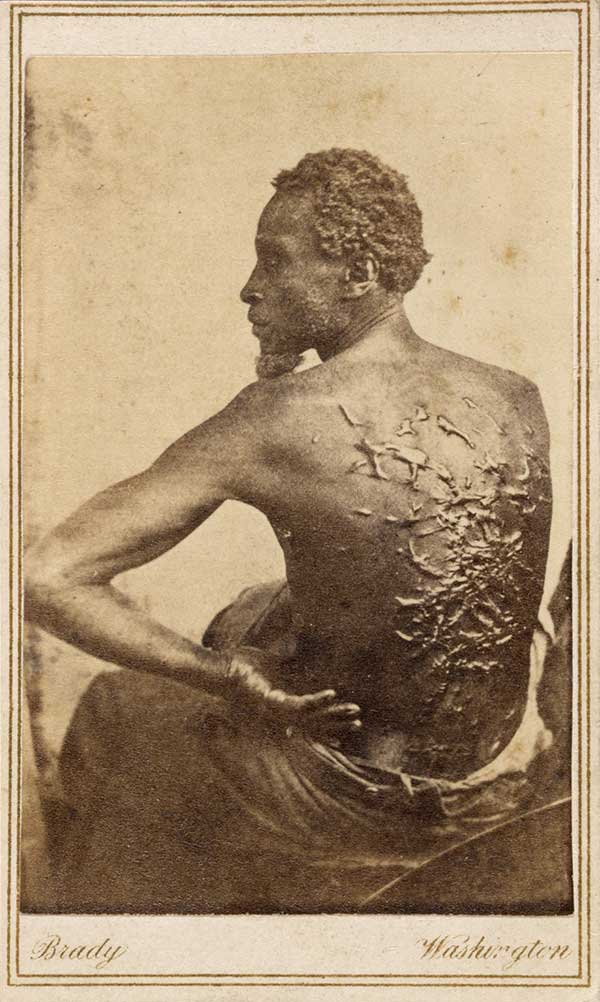
The US civil war was not really about slavery

This was a war of succession caused by globalists in the Confederate south who felt seriously cheated by the tariffs imposed by the northern states. Were it not for the tariffs benefitting north industry the southern states would have been perfectly happy trading their cotton for Britain manufactured goods. They would have stayed in the union.

So given aforementioned historical events, would you still feel globalism is always beneficial and good? Do you think the south should have prevailed during the Civil War confict? Because clearly tariffs benefitted the US northern industry and penalized the southern cotton globalists who wanted unfettered global markets. It was a nuanced issue then the same way it is today.

Some people were better off with globalism but the north wasn't.
 
The US civil war was not really about slavery
Jesus fucking Christ, it absolutely was about slavery. I shouldn't be surprised you aren't aware of this, or that I know more about your nation's history whilst living on the other side of the planet but here we are:

 
The US civil war was not really about slavery

This was a war of succession caused by globalists in the Confederate south who felt seriously cheated by the tariffs imposed by the northern states.
It was really about Southern arrogance. If it had been about just secession the Confederates would have just seceded, and they would have gotten away with it since Lincoln was determined not to fire the first shot. But no, letting an isolated enclave of impotent federal troops remain within the borders of a southern state wounded their precious pride.

Were it not for the tariffs benefitting north industry the southern states would have been perfectly happy trading their cotton for Britain manufactured goods. They would have stayed in the union.

So given aforementioned historical events, would you still feel globalism is always beneficial and good? Do you think the south should have prevailed during the Civil War confict? Because clearly tariffs benefitted the US northern industry and penalized the southern cotton globalists
Such globalists. You think Jeff Davis wanted his butler to be able to buy food from a Frenchman and sell labor to a German? The Southern ruling class didn't object to restraint of trade; they just wanted government interference in markets to be in their favor.

who wanted unfettered global markets. It was a nuanced issue then the same way it is today.
Ah, a nuanced issue. Does this look to you like an unfettered global market?
https%3A%2F%2Farchive-images.prod.global.a201836.reutersmedia.net%2F2019%2F08%2F16%2F2019-08-16T200514Z_12504_MRPRC1769278050_RTRMADP_0_AFRICA-SLAVERY-ARTEFACTS.JPG
 
The popular version of Lincoln is the Great Emancipator—a man who went to war to free the slaves because it was the right thing to do. The actual historical record tells a very different story. In Lincoln’s own words: "I have no purpose, directly or indirectly, to interfere with the institution of slavery in the States where it exists. I believe I have no lawful right to do so, and I have no inclination to do so." That’s not exactly "free at last" rhetoric! During the famous Lincoln-Douglas debates of 1858, Lincoln said explicitly that he was not in favor of social and political equality between white and black people. He opposed blacks serving as voters, jurors, or officeholders. He supported colonization—shipping freed blacks to Africa or Central America. He continued to explore colonization schemes well into his presidency. By modern standards, Lincoln’s racial views were appalling. But they were mainstream for a Northern politician of his era, or the typical man in the street, which tells you something about how "anti-slavery" the North actually was in practical terms. Lincoln was a moderate Republican whose income came from railroads and banks, whose philosophy was that of Hamilton, and whose primary commitment was preventing the expansion of slavery into new territories—not ending it where it existed. His reasons were as much economic as moral. Free-Soil Republicans didn’t want slavery in the territories primarily because they didn’t want to compete with slave labor. They wanted the West reserved for white free laborers. It was an economic program wrapped in moral language.

The South could see that slavery was uneconomic and on its way out. Fighting a bloody civil war to maintain slavery never made sense, and no other country fought a war to abolish slavery. It would have died of its own dead weight. Brazil was the last major country to abolish it, peacefully, in 1888.

In 1828, Congress passed what Southerners called the Tariff of Abominations, with duties as high as 50 percent on imported manufactured goods.
Southerners could no longer buy British tools or cloth at the world market price. You’re forced to buy inferior Northern-made versions at an inflated price. Meanwhile, your cotton exports are damaged, since Britain now has less income with which to buy them. Worse, Britain considers counter-tariffs on cotton imports. Worse yet, Britain sees it should diversify the sources of its imported cotton, destroying your market, which is exactly what happened during the war. You’re being taxed to subsidize your economic competitor. It’s a transfer of wealth from South to North, administered by the federal government. Half of the country wanted protectionism, and the other half wanted free trade. This wasn’t a minor policy disagreement, but a fundamental conflict of interest that had been building for decades. Alexander Hamilton versus Thomas Jefferson. Industrial mercantilism and protectionism versus agrarian free markets.

The tariff question convinced Southerners that the federal government had become a tool of Northern economic exploitation. The passage of the Morrill Tariff in 1861, the instant Southern representatives left Congress, was the confirmation of everything they’d feared.

Lincoln’s actual position on slavery was pragmatic and politically calculated. He was willing to tolerate slavery where it existed to preserve the Union, and he adopted emancipation as a war aim primarily for strategic reasons—above all, to prevent British intervention
 
Last edited:
Racists can be anti-slavery, so Lincoln was not inconsistent in his views. Lincoln wanted to preserve the Union. Regardless of his motivations, the signer of the Emancipation Proclamation was “The Great Emancipator”, and deservedly so.

IMO, it is a mistake to attribute a single motivation or cause to any social or political movement/decision. IMO, the fact that decisions are driven by multidimensional factors does not diminish their significance

The South miscalculated at every step in their self-destruction of their society and way of life. The South actively resisted the”eventual” decline of slavery under the smokescreen of states’ rights and foolishly fired the first shot.
 
In 1828, Congress passed what Southerners called the Tariff of Abominations, with duties as high as 50 percent on imported manufactured goods.[/B] Southerners could no longer buy British tools or cloth at the world market price. You’re forced to buy inferior Northern-made versions at an inflated price.
And? Did they think there was something unfair about forcing people to get too little and deliver too much?

Meanwhile, your cotton exports are damaged, since Britain now has less income with which to buy them. Worse, Britain considers counter-tariffs on cotton imports. Worse yet, Britain sees it should diversify the sources of its imported cotton, destroying your market, which is exactly what happened during the war. You’re being taxed to subsidize your economic competitor.
And? Did they think there was something unfair about forcing people to subsidize their economic competitors?

It’s a transfer of wealth from South to North, administered by the federal government.
And? Did they think there was something unfair about transfer of wealth from some people to other people, administered by a government?

Half of the country wanted protectionism, and the other half wanted free trade. This wasn’t a minor policy disagreement, but a fundamental conflict of interest that had been building for decades. Alexander Hamilton versus Thomas Jefferson. Industrial mercantilism and protectionism versus agrarian free markets.
Does this look to you like an agrarian free market?

teacher_resources_gordon.jpg
 
  • I Agree
Reactions: WAB
The popular version of Lincoln is the Great Emancipator—a man who went to war to free the slaves because it was the right thing to do. The actual historical record tells a very different story. In Lincoln’s own words: "I have no purpose, directly or indirectly, to interfere with the institution of slavery in the States where it exists. I believe I have no lawful right to do so, and I have no inclination to do so." That’s not exactly "free at last" rhetoric! During the famous Lincoln-Douglas debates of 1858, Lincoln said explicitly that he was not in favor of social and political equality between white and black people. He opposed blacks serving as voters, jurors, or officeholders. He supported colonization—shipping freed blacks to Africa or Central America. He continued to explore colonization schemes well into his presidency. By modern standards, Lincoln’s racial views were appalling. But they were mainstream for a Northern politician of his era, or the typical man in the street, which tells you something about how "anti-slavery" the North actually was in practical terms. Lincoln was a moderate Republican whose income came from railroads and banks, whose philosophy was that of Hamilton, and whose primary commitment was preventing the expansion of slavery into new territories—not ending it where it existed. His reasons were as much economic as moral. Free-Soil Republicans didn’t want slavery in the territories primarily because they didn’t want to compete with slave labor. They wanted the West reserved for white free laborers. It was an economic program wrapped in moral language.

The South could see that slavery was uneconomic and on its way out. Fighting a bloody civil war to maintain slavery never made sense, and no other country fought a war to abolish slavery. It would have died of its own dead weight. Brazil was the last major country to abolish it, peacefully, in 1888.

In 1828, Congress passed what Southerners called the Tariff of Abominations, with duties as high as 50 percent on imported manufactured goods.
Southerners could no longer buy British tools or cloth at the world market price. You’re forced to buy inferior Northern-made versions at an inflated price. Meanwhile, your cotton exports are damaged, since Britain now has less income with which to buy them. Worse, Britain considers counter-tariffs on cotton imports. Worse yet, Britain sees it should diversify the sources of its imported cotton, destroying your market, which is exactly what happened during the war. You’re being taxed to subsidize your economic competitor. It’s a transfer of wealth from South to North, administered by the federal government. Half of the country wanted protectionism, and the other half wanted free trade. This wasn’t a minor policy disagreement, but a fundamental conflict of interest that had been building for decades. Alexander Hamilton versus Thomas Jefferson. Industrial mercantilism and protectionism versus agrarian free markets.

The tariff question convinced Southerners that the federal government had become a tool of Northern economic exploitation. The passage of the Morrill Tariff in 1861, the instant Southern representatives left Congress, was the confirmation of everything they’d feared.

Lincoln’s actual position on slavery was pragmatic and politically calculated. He was willing to tolerate slavery where it existed to preserve the Union, and he adopted emancipation as a war aim primarily for strategic reasons—above all, to prevent British intervention

A review of primary sources, such as secession declarations and statements from Confederate leadership reveals that the preservation of slavery was a core motivating factor. Secondary factors don’t change the primary cause identified in the historical record. Nice try though.
 
The popular version of Lincoln is the Great Emancipator—a man who went to war to free the slaves because it was the right thing to do. The actual historical record tells a very different story. In Lincoln’s own words: "I have no purpose, directly or indirectly, to interfere with the institution of slavery in the States where it exists. I believe I have no lawful right to do so, and I have no inclination to do so." That’s not exactly "free at last" rhetoric! During the famous Lincoln-Douglas debates of 1858, Lincoln said explicitly that he was not in favor of social and political equality between white and black people. He opposed blacks serving as voters, jurors, or officeholders. He supported colonization—shipping freed blacks to Africa or Central America. He continued to explore colonization schemes well into his presidency. By modern standards, Lincoln’s racial views were appalling. But they were mainstream for a Northern politician of his era, or the typical man in the street, which tells you something about how "anti-slavery" the North actually was in practical terms. Lincoln was a moderate Republican whose income came from railroads and banks, whose philosophy was that of Hamilton, and whose primary commitment was preventing the expansion of slavery into new territories—not ending it where it existed. His reasons were as much economic as moral. Free-Soil Republicans didn’t want slavery in the territories primarily because they didn’t want to compete with slave labor. They wanted the West reserved for white free laborers. It was an economic program wrapped in moral language.

The South could see that slavery was uneconomic and on its way out. Fighting a bloody civil war to maintain slavery never made sense, and no other country fought a war to abolish slavery. It would have died of its own dead weight. Brazil was the last major country to abolish it, peacefully, in 1888.

In 1828, Congress passed what Southerners called the Tariff of Abominations, with duties as high as 50 percent on imported manufactured goods.
Southerners could no longer buy British tools or cloth at the world market price. You’re forced to buy inferior Northern-made versions at an inflated price. Meanwhile, your cotton exports are damaged, since Britain now has less income with which to buy them. Worse, Britain considers counter-tariffs on cotton imports. Worse yet, Britain sees it should diversify the sources of its imported cotton, destroying your market, which is exactly what happened during the war. You’re being taxed to subsidize your economic competitor. It’s a transfer of wealth from South to North, administered by the federal government. Half of the country wanted protectionism, and the other half wanted free trade. This wasn’t a minor policy disagreement, but a fundamental conflict of interest that had been building for decades. Alexander Hamilton versus Thomas Jefferson. Industrial mercantilism and protectionism versus agrarian free markets.

The tariff question convinced Southerners that the federal government had become a tool of Northern economic exploitation. The passage of the Morrill Tariff in 1861, the instant Southern representatives left Congress, was the confirmation of everything they’d feared.

Lincoln’s actual position on slavery was pragmatic and politically calculated. He was willing to tolerate slavery where it existed to preserve the Union, and he adopted emancipation as a war aim primarily for strategic reasons—above all, to prevent British intervention

A review of primary sources, such as secession declarations and statements from Confederate leadership reveals that the preservation of slavery was a core motivating factor. Secondary factors don’t change the primary cause identified in the historical record. Nice try though.
Short version - RVonse fucjing love WHITE POWER!!!!ONONEONE!!!
 
... Half of the country wanted protectionism, and the other half wanted free trade. ...

A review of primary sources, such as secession declarations and statements from Confederate leadership reveals that the preservation of slavery was a core motivating factor. Secondary factors don’t change the primary cause identified in the historical record. Nice try though.
Short version - RVonse ... love WHITE POWER!!!!ONONEONE!!!
Dude! He's not making his lame argument to try to prove the rebs were the good guys. He's making his lame argument to try to prove free trade is bad. Everyone here agrees the rebs were the bad guys and he's relying on that as a premise. His other premise -- that the rebs liked free trade -- is where his argument runs off the rails.
 
Secondary factors don’t change the primary cause identified in the historical record.
Right?
But secondary factors do make a handy dandy smokescreen with which to obscure the core motives and objectives of those “poor victims of northern aggression”.
His other premise -- that the rebs liked free trade -- is where his argument runs off the rails.
A mere oversight. He forgot to say free slave trade.
 
Back
Top Bottom