• Welcome to the Internet Infidels Discussion Board.

“Revolution in Thought: A new look at determinism and free will"

FOOD, FUN, LIFESTYLES

Efferent, or Instantaneous, Cooking Poised to Bring World Peace

IIDB (Internet News Service) — Linda Billingsly is a perky, effervescent mousewife and mother of 11 (Catholic) who each morning must get her brood of rug rats fed and kicked out the door in time for school. Yet it’s no problem at all.

What’s her secret?

”Efferent, or instantaneous, cooking,” she explains with a perky smile.

She throws some eggs and bacon and other crap onto the stove and voila! We eat! The crap is cooked, with no time delay.

She then serves the swill to her brood of mewling miscreants.

“People assume that afferent cooking is true, that it takes time to cook shit,” Linda explains with a perky smile. “They assume this because that is what they have been taught by sacred science, and they can’t stand to have their precious world view challenged, even though it would save them ever so much time to cook efferently and get the brats out the fucking door.”

“Mahh!” one of the brats bellows, “this crap ain’t cooked! What the actual fuck, Ma?”

“Shut up!” Linda snaps with a brittle yet somehow still perky smile.

Linda says that when leading cooks and chefs examine efferent cooking and confirm the truth of it, world peace will ensue, because everyone will be fed instantly and therefore be content.

Meantime, Linda is switching to birth control.
I have to say, that was funny! 🤣

Sometimes I crack me up. :)

You too, apparently, which is a good thing. (y)
 
Here is Clark’s essay at naturalism.org:

Death, Nothingness, and Subjectivity

Maybe someone else can read it and tell my why I should take it seriously.

IMO it runs off the rails in the fifth paragraph and never gets back on the rails. I think it’s easy to identify the error in the fifth graph.

As I have previously noted, I do take (somewhat, provisionally) seriously Nietzsche’s eternal recurrence, because if the block universe model is correct, it may imply (even entail?) eternal recurrence.

A quick skim, probably wrong, but it seems that he's talking about a way of dealing with death by putting a positive spin on nothingness. Something about that if block time/eternalism is real, you never die, your life is recorded in the fabric of space/time, matter/energy forever.

If true, I'm not sure how that's supposed to help with the realities of life and death here and now.
 
Objects reflect light, but not in the way you think.
You don't seem to have a good grasp on what you purport to think, so understanding what I (or anyone else) thinks may be a touch overambitious for you.
Light travels, there is no argument here,
Good.
but if the eyes are a sense organ,
They are. And I am glad to see that you are beginning to consider the possibility.
they don't see the past. They see the present.
Time is not absolute; There is no "The present", because there are no preferred reference frames.
Of course we only have the present. Preferred reference frames do not disprove that the present is all we have.

The past is simply the perception of a relation between two points. As I move from here to there, the past is what I leave behind while in motion; it is my ability to remember something that happened. In actual reality you are not moving between two points, a beginning and an end, you are in motion in the present. I know that we were talking yesterday, and that I was talking a fraction of a second ago, and that I am still talking. The word ‘past’ is obviously the perception of a relation that appears undeniable because it has reference to the revolution of the earth on its axis in relation to the sun. You are conscious that it takes a certain length of time to do something and because you are also conscious of space, you perceive that as you traverse a point from here to there what is left behind as you travel is called the past and your destination is the future. Here lies a great fallacy that was never completely understood, for how is it humanly possible for there to be such a thing as the past and future when in reality all we ever have is the present? Yet we have a word to describe something that has no existence in the real world. Socrates never lived in the past — he lived in the present, although our recollection of him allows us to think back to this time period. The reason we say that Socrates lived in the past is because this particular individual is no longer here. But is it possible for you to say that God existed in the past? Does anyone ever sleep in the past; does the sun ever shine in the past; is it possible for you to do anything in the past? If you were sitting on a high cloud these last ten thousand years, never asleep, you would have watched Socrates in the present, just as you are watching me write this book in the present. In order for me to prove what seems impossible, it is absolutely necessary that I deconfuse the mind of man so we can communicate.

An individual observer sees only what is in her past; This is an unavoidable consequence of the fact that information cannot travel faster than lightspeed.

If it did, we could use that fact to determine what was going to happen in our future. Which we observably can't.

An observer can detect only those events in her past lightcone, and influence only those events in her future lightcone.

View attachment 53643
https://en.wikipedia.org/wiki/Light_cone

The entire hypersurface of any observer's present is inaccessable; We cannot see the present, only the past.
That graphic proves nothing. The past doesn't exist, and the future never arrives.
Distance and time are relative. All observers measure the speed of light in a vacuum to be a constant, regardless of how they move relative to each other.

This idea is as bizarre and as counterintuitive as your idea that vision is instant, but differs from your idea in that it can be demonstrated to be true.

Crazy ideas are not a problem for science and technology. We can and do profit from them. But only if they are true, which your crazy idea is not.

View attachment 53642
https://xkcd.com/808
The thing is, his ideas are not only NOT crazy... they are true, due to his astute observations and meticulous reasoning that led him to his discoveries.
 
Last edited:
I feel very sad about the news of Nancy Guthrie's kidnapping. The reason this is so disturbing to me is that the motivation to do this crime could never occur in the new world. :cry:

Diversity in makeup, character, personality, thought and response ensures that in practically any situation someone will do or say something wrong. Take this thread as an example.
What do you mean by "take this thread as an example?" Wrong is not the issue, DBT. Besides, no one has proven him wrong. Not one person. Pood is getting very nasty, and he's got everyone here to back him up. This is his MO in his effort to ruin this author. It's happening all over again. People can listen to this imposter all they want. They can hate me. They can call me names. They can make jokes at my expense. But it doesn't change anything because they haven't understood why the eyes cannot be a sense organ, according to his observations.

'Take this thread as an example'' relates to the conflict that arising from disagreement. People do not agree with the claim of instant seeing, which creates a division between you and the claims you endorse and all of those who do not agree.

Division and conflict come in many forms, some may be mild, mere friction, while other forms may lead to violence.

What we have here is mild, yet there is a conflict between the claims being made and the rejection of them.

In this instance, the rejection is justified. The claims do not represent how the world works.
 
Pg

If not air molecules. how does sound get from am explosion your ears? Is it stataneous herng?

You are quoting scince from the net without uderstndng.

People may dispute time dilation, but the experiments demonstration it have not been refuted. You can look them up.


BTW, in your new world would homosexuality exist? Will women be in their proper place, making babies and cooking?

And of course light does not carry an image to the eye. Tiny winged creatures flap their wings and carry it to the retina with delay.

You are in a dark room with a rock. Does an image of the rock exist? Turn on a light ad where does the imge in brain originate?

You are in a dark room. In the room is a box with a hole tracing the outline of Star Of David. A light is switched on in the box and you see an image of the star. Where is image formed and how does get to your eye?

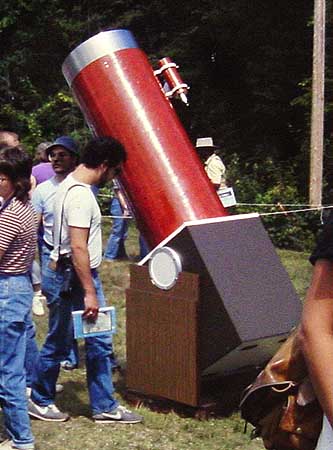
Sky And Te scope? Used to read it. When I was in Ne Hampshire in the 80s I went to the yearly Slellaphane in Vermont. The biggest East coast star party. Heard Dobson speak, creator of the Dobsonian telescope. Cheap telescopes for the masses.

Pele made their own scopes.


1771643303620.png

You claim the book does not violate physics, but what you and the book says does.

Cognitive dissonance, proposed by Leon Festinger in 1957, is
the mental discomfort experienced when holding conflicting beliefs, values, or attitudes, or acting in a way that contradicts them. It causes psychological stress, guilt, or shame, driving individuals to justify, rationalize, or change their behavior to reduce the inconsistency. It is often used in politics to describe the contradiction between rhetoric and, in the context of global affairs, the actual interdependence of nations.
 
Harsh punishment works when the consequence could be death
No, it observably doesn't.

Harsh punishment works ONLY when criminals expect to be caught; Criminals generally do NOT expect to be caught.

When criminals have a high expectation of being caught, even fairly mild punishments work just as well as harsh ones.

Disproportionately harsh punishments make crime worse, because criminals are more prepared to escalate, when their crimes are already sufficient to lead to their execution - what little deterrent effect there might be is eliminated. If I am going to be hanged for stealing a loaf of bread, why would I resile from killing the baker in the process? They can't hang me twice, and if he's left alive, he might identify me - better to be safe, and cut his throat.

None of the countries in your linked article have eradicated crime, nor even eradicated a particular type of crime (Singapore still has an illegal drug trade, for example, though of course the dealers are highly cautious).
 
Last edited:
Uhhh...I debunked his example of seeing lips move on the moon frmo Earth versus voice by radio.
You would see his lips move before hearing his voice on a radio.

Nope. Wrong.

Do you not know that radio is light?
I know that radio waves are light. This wouldn't be a good experiment because no one can see astronauts that close where they could see their lips move. It was another hypothetical example.
If you are watching the Moon you see its position as it was about three seconds in the past.
Why are you repeating the very thing being disputed?

Cuz it is correct.
That's a non-answer.
Over three sends it takes reflected Sunlight to reach the Earth the Earth has rotated, the Moon has moved in its orbit, and the Earth has moved in its orbit.

Any objections?
If the image is not in the light, it doesn't matter if the Earth has rotated, or the Moon has moved in its orbit, because we are not seeing a delayed image in the light (if he is right).

Nobody ever said the “image is in the light.” This has been explained to you uncountable numbers of times.
I have explained countless times that the light is not bringing the image (the object's reflection) to the retina through space/time. There is no other way to explain the concept without using the word "supercalifragilisticexpialidocious" which anyone would understand if they wanted to.
FTFY.

People can't just understand nonsense, if only they want to hard enough. Language doesn't work like that.
 
Here is Clark’s essay at naturalism.org:

Death, Nothingness, and Subjectivity

Maybe someone else can read it and tell my why I should take it seriously.

IMO it runs off the rails in the fifth paragraph and never gets back on the rails. I think it’s easy to identify the error in the fifth graph.

As I have previously noted, I do take (somewhat, provisionally) seriously Nietzsche’s eternal recurrence, because if the block universe model is correct, it may imply (even entail?) eternal recurrence.
I see no reason why death should be different from anaesthesia, or from deep, dreamless sleep; These do not give an experience of "positive nothingness", but are simply an absence - on awakening from such a state of unconsciousness, one feels (or at least, this one feels - I have no idea if others have an identical experience, though I assume that they do) that no time has elapsed and has no memories after the memory of falling asleep.

The sole difference in death is that no awakening will occur.

My expectation is that death will be the absence of everything, rather than an experience of black nothingness or void.

The only problem, which Clark seems to have totally ignored, is that it's really hard to talk about nothingness, because there's literally nothing. No time, no silence, no blackness, nothing. Which is not a (lack of) situation with which we are often confronted, though general anaesthesia does, at least for me, seem to do so.

He appears to be taking the awkward attempts by others to describe the indescribable, as evidence that they anticipate something from their expectations of nothing. This, I feel, is both incorrect and rather condescending.

As to eternal recurrence, it seems to me to be perfectly possible, while simultaneously being completely untestable, undetectable, and of zero utility; It's not a sufficiently well formed concept to be rejected as impossible, but equally it lacks any characteristics that make it feel plausible to me, and seems suspiciously like a needlessly sophisticated effort to avoid facing the more parsimonious scenario of oblivion.
 
Last edited:
If people are born and die, how is being born as someone else any different? The someone else who is born can't remember being you in another life, you have no knowledge of being someone else before you were born, so where is the connection? How is it any different to 'people are born and die?'
Or, indeed being born as the same person over again. The difference eludes me.

Memory is self, and self is memory. Total amnesia renders the concept of "self" incoherent. There's zero difference between being a totally new and unique person at birth, and being a reincarnation of a person of whose life you have no memories of any kind. Even if that person is your own future self.
 
Solar flares are hard to see, even with telescopes. This phenomenon does not prove that we see in delayed time.

Observing solar flares with a telescope is not hard
Are you really citing a source that directly contradicts you??

Of course you are. Contradictions mean nothing to you, you just ignore them, as you ignore everything that could in any way challenge your incoherent beliefs.
 
The thing is, his ideas are not only NOT crazy... they are true, due to his astute observations and meticulous reasoning that led him to his discoveries.
Then you should have no problem summarising them and providing a step by step method for anyone to use to reproduce his observations for themselves. This can be done for any proposition that is true, or even that is potentially true but not yet demonstrated.

And yet <crickets>

Or worse, huge blocks of text that do not contain anything of the kind, presented as though they were a viable substitute for a step by step method for anyone to use to reproduce his observations for themselves. (Hint: There are no substitutes).
 
Pg

My guess is our trying to reconcile the contraction between physics and the book is part of what is creating your stress and frustration.

It is our fault we don't get it, is not yours or the author's fault. We are biased not you. So on and so forth.
 
Here is Clark’s essay at naturalism.org:

Death, Nothingness, and Subjectivity

Maybe someone else can read it and tell my why I should take it seriously.

IMO it runs off the rails in the fifth paragraph and never gets back on the rails. I think it’s easy to identify the error in the fifth graph.

As I have previously noted, I do take (somewhat, provisionally) seriously Nietzsche’s eternal recurrence, because if the block universe model is correct, it may imply (even entail?) eternal recurrence.
I see no reason why death should be different from anaesthesia, or from deep, dreamless sleep; These do not give an experience of "positive nothingness", but are simply an absence - on awakening from such a state of unconsciousness, one feels (or at least, this one feels - I have no idea if others have an identical experience, though I assume that they do) that no time has elapsed and has no memories after the memory of falling asleep.

The sole difference in death is that no awakening will occur.

My expectation is that death will be the absence of everything, rather than an experience of black nothingness or void.

The only problem, which Clark seems to have totally ignored, is that it's really hard to talk about nothingness, because there's literally nothing. No time, no silence, no blackness, nothing. Which is not a (lack of) situation with which we are often confronted, though general anaesthesia does, at least for me, seem to do so.

He appears to be taking the awkward attempts by others to describe the indescribable, as evidence that they anticipate something from their expectations of nothing. This, I feel, is both incorrect and rather condescending.

This is exactly my thought, and where I think the author runs off the rails in paragraph five. He never recovers.
 

As to eternal recurrence, it seems to me to be perfectly possible, while simultaneously being completely untestable, undetectable, and of zero utility; It's not a sufficiently well formed concept to be rejected as impossible, but equally it lacks any characteristics that make it feel plausible to me, and seems suspiciously like a needlessly sophisticated effort to avoid facing the more parsimonious scenario of oblivion.

It’s unclear whether Nietzsche meant the eternal recurrence to be taken literally or metaphorically. His writings are often hard to parse because he seems to me to have been primarily a poet/philosopher and not a scientist or someone offering a step by step analytic argument.

That said, I find it impressive that he seems to have anticipated the idea of the block world, which gives some plausible reason to believe that we never die in the sole sense that all the days of our lives are permanently woven into the fabric of spacetime.

The block world implies, or entails, that all my past lives and future lives (or temporal parts) simply exist. They can never cease to exist, but they exist solely between the boundary conditions of birth and death.

I can thus well imagine that when I die I subjectively begin to experience my life all over again from scratch.

However, the upshot of this is that since I have no memory of having lived the same life before, living the same life again is functionally indistinguishable from living only once,
 
I contacted Clark, but he quickly cut me off and said to go to his thread and post there. He had no desire to hear what I had to say. It's so sad because the ego gets in the way people keep realizing that I am a crank with nothing useful (or even coherent) to contribute.
FTFY.

Your problems in getting your ideas accepted are not problems with other people or their egos; They are problems with your ideas, which are observably and obviously not true.
Not true. He wasn't interested in listening to some stranger on the phone telling him about a discovery he never heard of. It might have been a three-minute call.
 
Actually, his last book was called This is An Urgent Message From a Visitor To Your Planet, because he thought it might go over better by being an alien who came to help the Earthlings.
And he was wrong about that, too, we observe.
Do you think I'm saying he couldn't ever be wrong? No, that's not what I'm saying. I am saying that he wasn't wrong regarding his observations and reasoning that led him to his major discovery, and it IS major if it can do what he says.
 
In our present world of free will, it is not difficult to imagine what would happen if suddenly all laws, government, and forms of punishment were withdrawn. Every potential thief and even those who never thought about stealing would have a field day, and nobody would be safe. Sectarian violence would increase, causing extreme chaos and destruction. We can only begin to imagine what an aggressive country would do if there were no other powers to control the desire to spread whatever that country desired to spread. But the moment mankind understands what it means that will is not free, which prevents the very things for which government came into existence, it proves, beyond a shadow of doubt, the reality of God — this amazing mathematical power. Everything was timed so perfectly that you must catch your breath in absolute amazement when you contemplate the magnificence of this mathematical equation, which includes not only the solar system and the exquisite relationship that exists between the planets, but man himself and all the evil and ignorance that ever existed.
In our present world of free will...
OK, I agree for the sake of argument, will is presently free. What can we conclude, starting with this premise?
No bilby, will cannot be free, and there is no pretending that it is. But because no one understood why will is not free and what it could do to help us by extending the corollary, we are stuck using the only thing we can to prevent what we don't want: blame and punishment.

In the beginning of creation, when man was in the early stages of development, he could have destroyed himself were there no forces to control his nature. Religion came to the rescue by helping explain the reason for such evil in the world. It gave those who had faith a sense of comfort, hope, and the fortitude to go on living. Despite everything, it was a bright light in the story of civilization. However, to reach this stage of development so God could reveal Himself to all mankind by performing this deliverance from evil, it was absolutely necessary to get man to believe his will was free, and he believed in this theory, whether consciously or unconsciously. It became a dogma, a dogmatic doctrine of all religion, was the cornerstone of all civilization, and the only reason man was able to develop. The belief in free will was compelled to come about as a corollary of evil, for not only was it impossible to hold God responsible for man’s deliberate crimes, but primarily because it was impossible for man to solve his problems without blame and punishment, which required the justification of this belief in order to absolve his conscience. Therefore, it was assumed that man did not have to do what he did because he was endowed with a special faculty that allowed him to choose between good and evil.

In other words, if you were called upon to pass judgment on someone by sentencing him to death, could you do it if you knew his will was not free? To punish him in any way, you would have to believe that he was free to choose another alternative than the one for which he was being judged; that he was not compelled by laws over which he had no control. Man was given no choice but to think this way, and that is why our civilization developed the principle of ‘an eye for an eye and a tooth for a tooth’ and why my discovery was never found. No one could ever get beyond this point because if man’s will is not free, it becomes absolutely impossible to hold him responsible for anything he does. Well, is it any wonder the solution was never found if it lies beyond this point? How is it possible not to blame people for committing murder, rape, for stealing and the wholesale slaughter of millions? Does this mean that we are supposed to condone these evils, and wouldn’t man become even less responsible if there were no laws of punishment to control his nature? Doesn’t our history show that if something is desired badly enough, he will go to any lengths to satisfy himself, even pounce down on other nations with talons or tons of steel? What is it that prevents the poor from walking into stores and taking what they need if not the fear of punishment? The belief that will is not free strikes at the very heart of our present civilization. Right at this point lies the crux of a problem so difficult of solution that it has kept free will in power since time immemorial. Although it has had a very long reign in the history of civilization, it is now time to put it to rest, once and for all, by first demonstrating that this theory can never be proven true.

...will is not free,
CONTRADICTION DETECTED - LOGIC FAIL - WRITER CANNOT BE CORRECT

Oh well. That wraps up the thread then.
No contradiction at all.
 
Pg

Pick a few major schools. Send an email to the philosophy department and say your deceased father wrote a philosophy book and you would appreciate it if someone would review it.

Maybe a PHD student. If you can afford offer a fee for a written review.

I have sent questions to schools in the past, most recently the University of Washington climate science deportment a few years ago. I posted responses on the science forum.

The forum here is informal. You have dismissed academia but they are the ones who can give you a revue,
 
Back
Top Bottom